Sighișoara

00

Caput Primum

A medieval city that never stopped being lived in.

Why Sighișoara

ew European cities can still claim, with no asterisks, that the centuries have not finished with them. Within these walls, more than eight hundred winters have passed without breaking the line.

  1. I

    UNESCO World Heritage since 1999

    The historic centre is one of eleven Romanian sites on the World Heritage list, and the only one whose claim is a fortified medieval town that people still live inside. Cobblestone passages, Saxon towers, and a Clock Tower that has kept time for six hundred years.

    Inscribed UNESCO, MCMXCIX

  2. II

    Birthplace of Vlad the Impaler

    Vlad III was born here around 1431 in the yellow house on Strada Cositorarilor. The Wallachian voivode whose surname Bram Stoker would lift, four centuries later, for an English vampire novel learned to read and ride within these walls.

    n. MCDXXXI

  3. III

    Europe's last inhabited medieval citadel

    Most fortified European hill towns have been abandoned, restored as museums, or sanitised into theme parks. Sighișoara is none of those. People still live in the citadel. Children walk to school past 700-year-old towers.

    Inhabited to this day

  4. IV

    Saxon Transylvania, since the 12th century

    First documented as a Saxon settlement in 1191, the city carries a layered cultural memory: German craftsmen, Hungarian nobility, Romanian shepherds, Roma musicians. The architecture remembers all of them.

    Saxons, since MCXCI

Interludium

Few cities can still claim to be lived in as they were dreamed. Sighișoara is one of them, and the lamps in the citadel windows are not lit for show.

field notes, autumn 1894

Numerologium

By the numbers

Computus Civitatis

A page from the citadel almanac; six small certainties that have outlasted empires.

835

annorum

years lived in

since 1191

64 m

altitudo turris

Clock Tower

9

turres

towers still standing

175

gradus

wooden steps to the school

1431

natus est

year Vlad III was born

1648

imagines pictae

painted figures set in the clock

data, from the citadel records

Caput Secundum

Sex loci intra muros

Six places inside the citadel walls.

Each of these places earned its name from a thing that happened inside it. The citadel kept the names; the names kept the city.

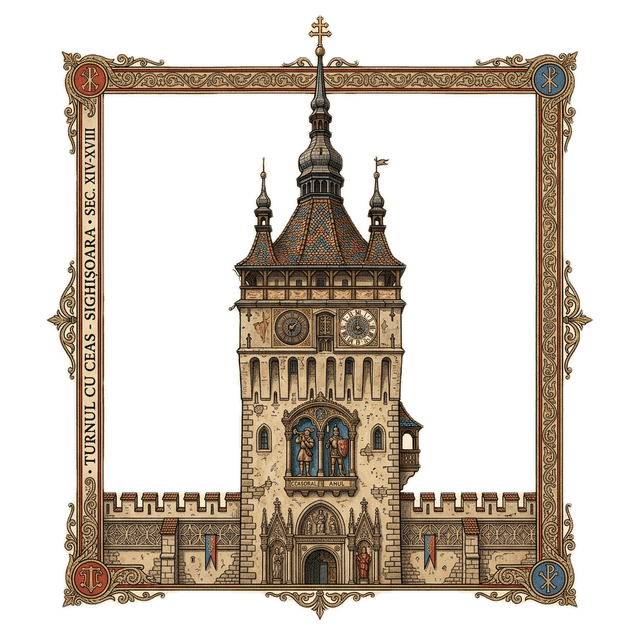
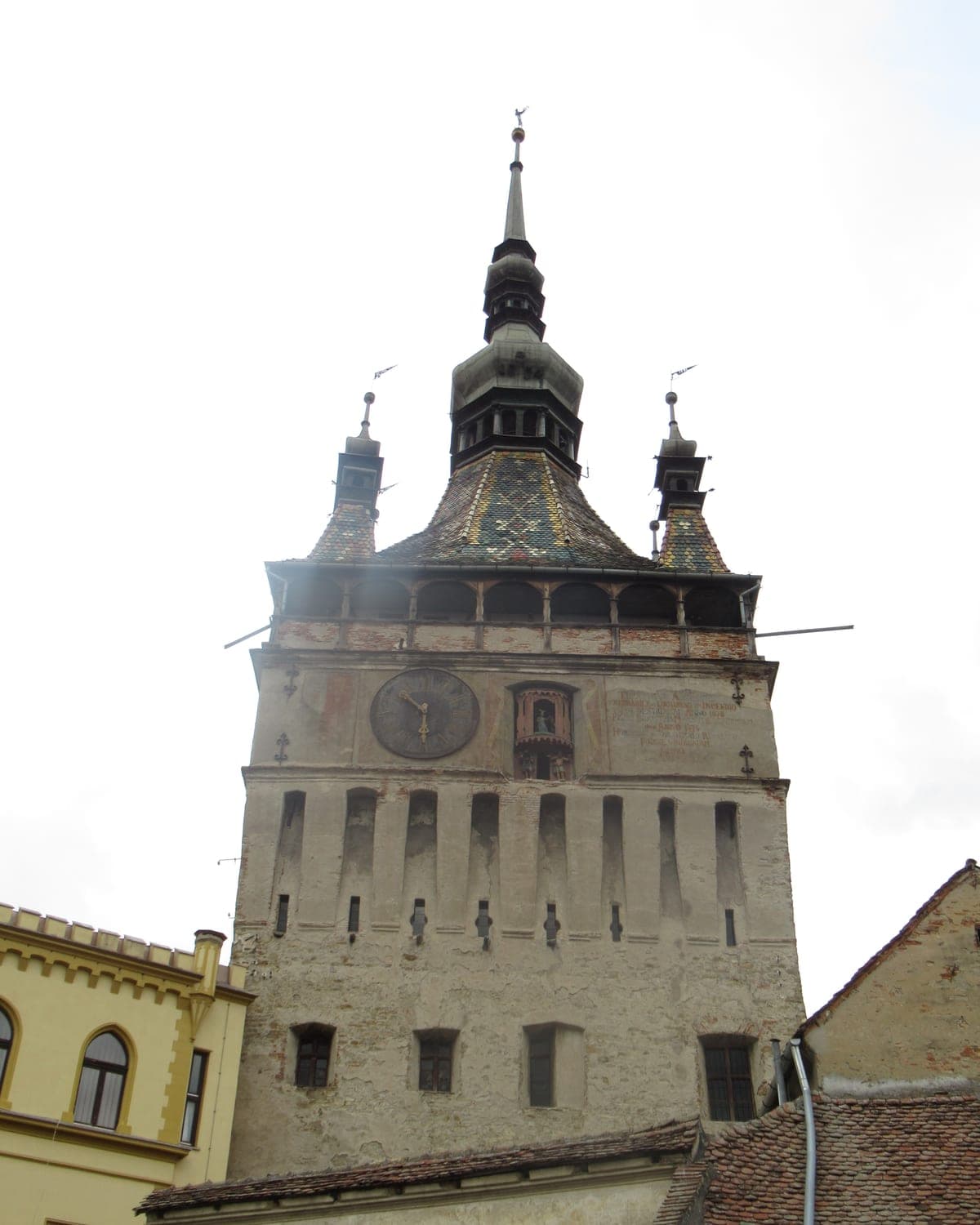
  • Sighișoara Clock Tower with its colourful glazed tile roof and painted clock face
    fig. I.
    I.Anno 14th century

    Clock Tower

    Turnul cu Ceas

    The 64-metre tower has guarded the main gate of the upper citadel since the 1300s. Wooden figures rotate at midnight, the same mechanism the city has watched for almost three hundred years. Climb the narrow staircase for the view that ends every postcard.

    Hora fugitthe hour flees
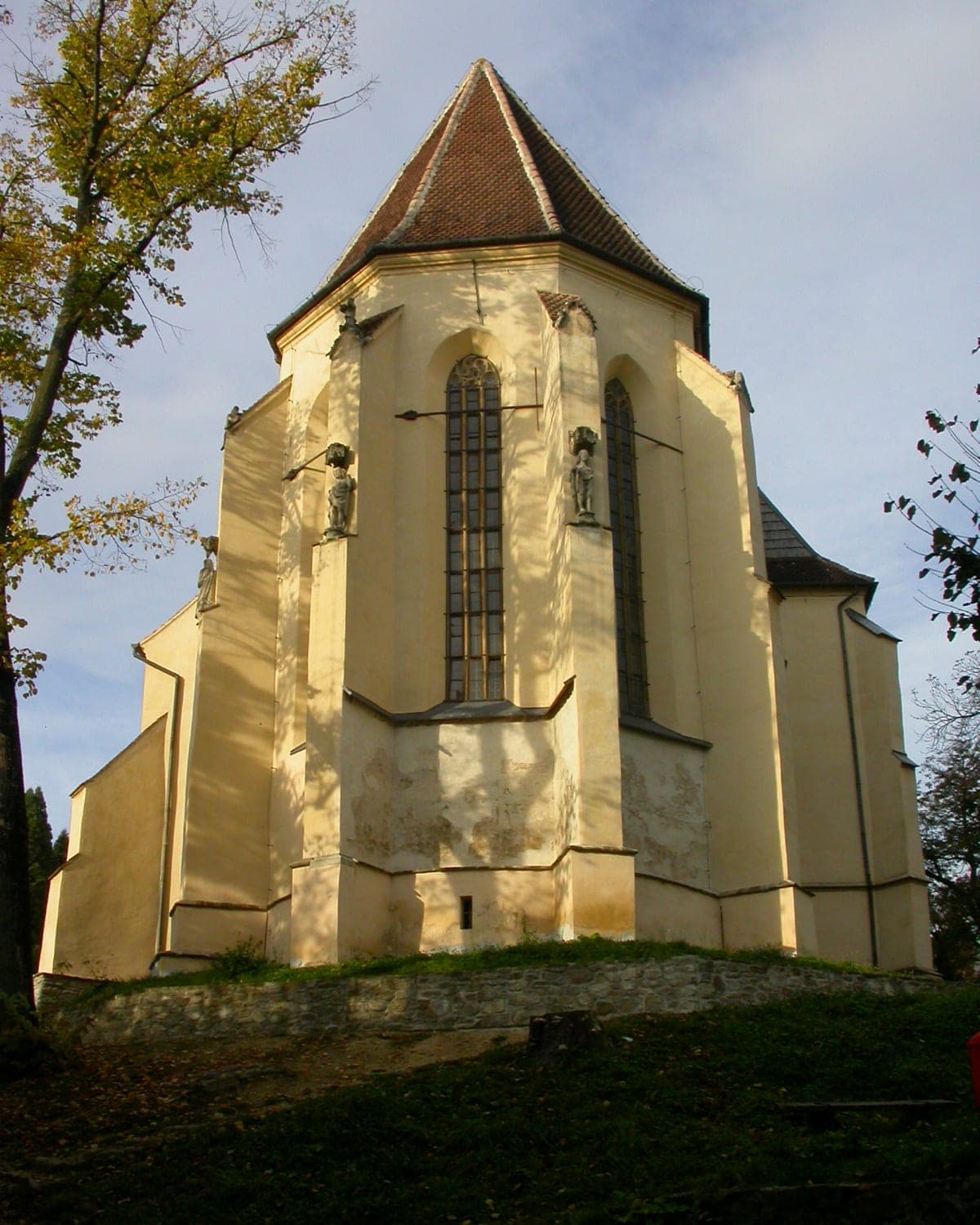
  • Apse of the Lutheran Church on the Hill above Sighișoara, lit by autumn afternoon sun
    fig. II.
    II.Anno Gothic, 14th to 15th century

    Church on the Hill

    Biserica din Deal

    Reached by climbing the Covered Staircase, this Lutheran church sits at the highest point of the citadel. Built in Gothic over a 13th-century Romanesque foundation, it has been Lutheran since the Saxons converted in 1547. Inside, restored medieval frescoes peek through later whitewash. The acoustics during evening services are unlike anything else in Transylvania.

    Sursum cordalift up your hearts
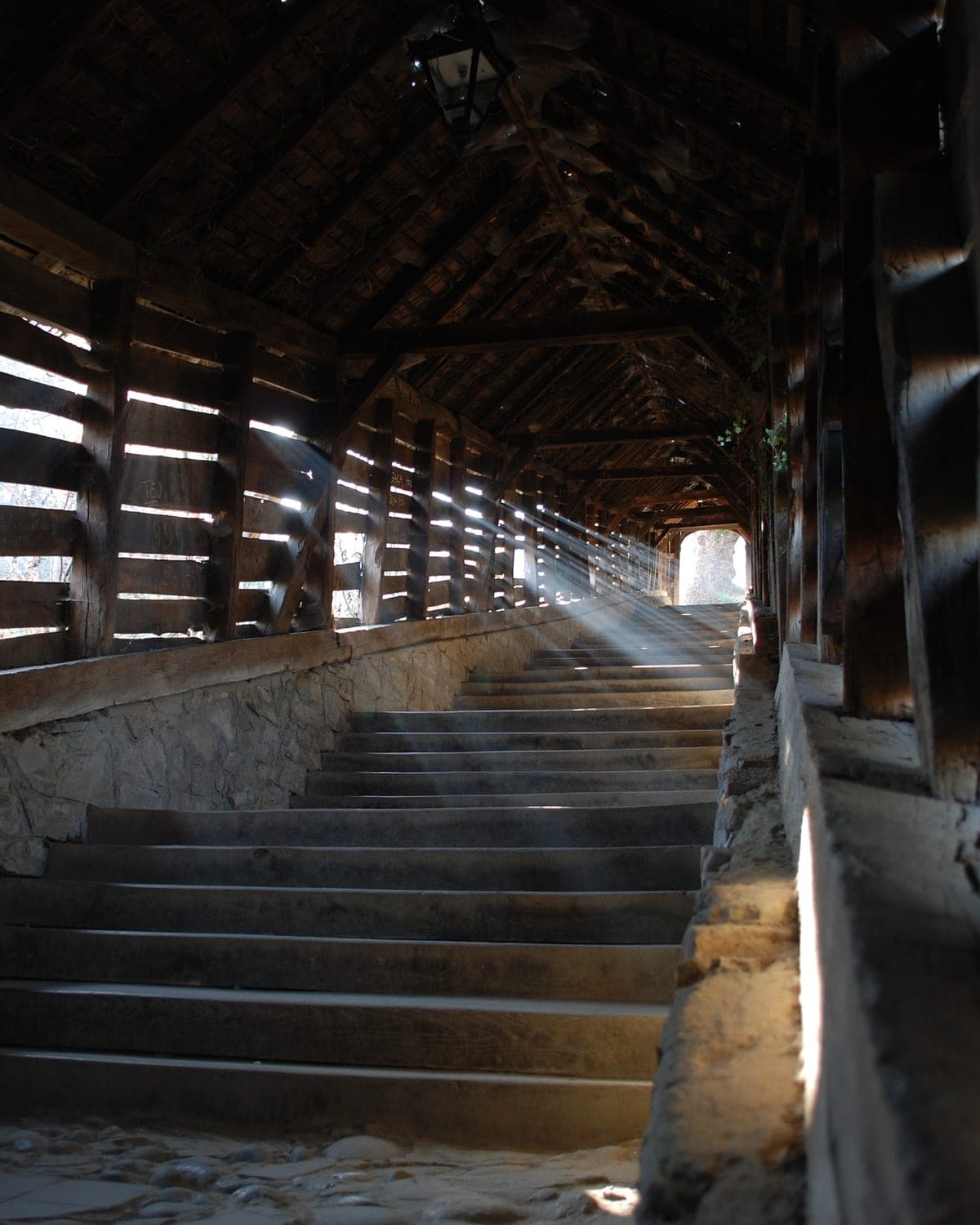
  • Sunbeams falling through the slatted walls of the Covered Staircase tunnel in Sighișoara
    fig. III.
    III.Anno 1642

    Covered Staircase

    Scara Acoperită

    175 wooden steps, completely roofed, built so Saxon students could reach the school on the hill in winter without slipping. Walking up at dusk, with the wood creaking and the light turning honey-coloured between the slats, is the closest most travellers get to time travel.

    Per gradusby the steps
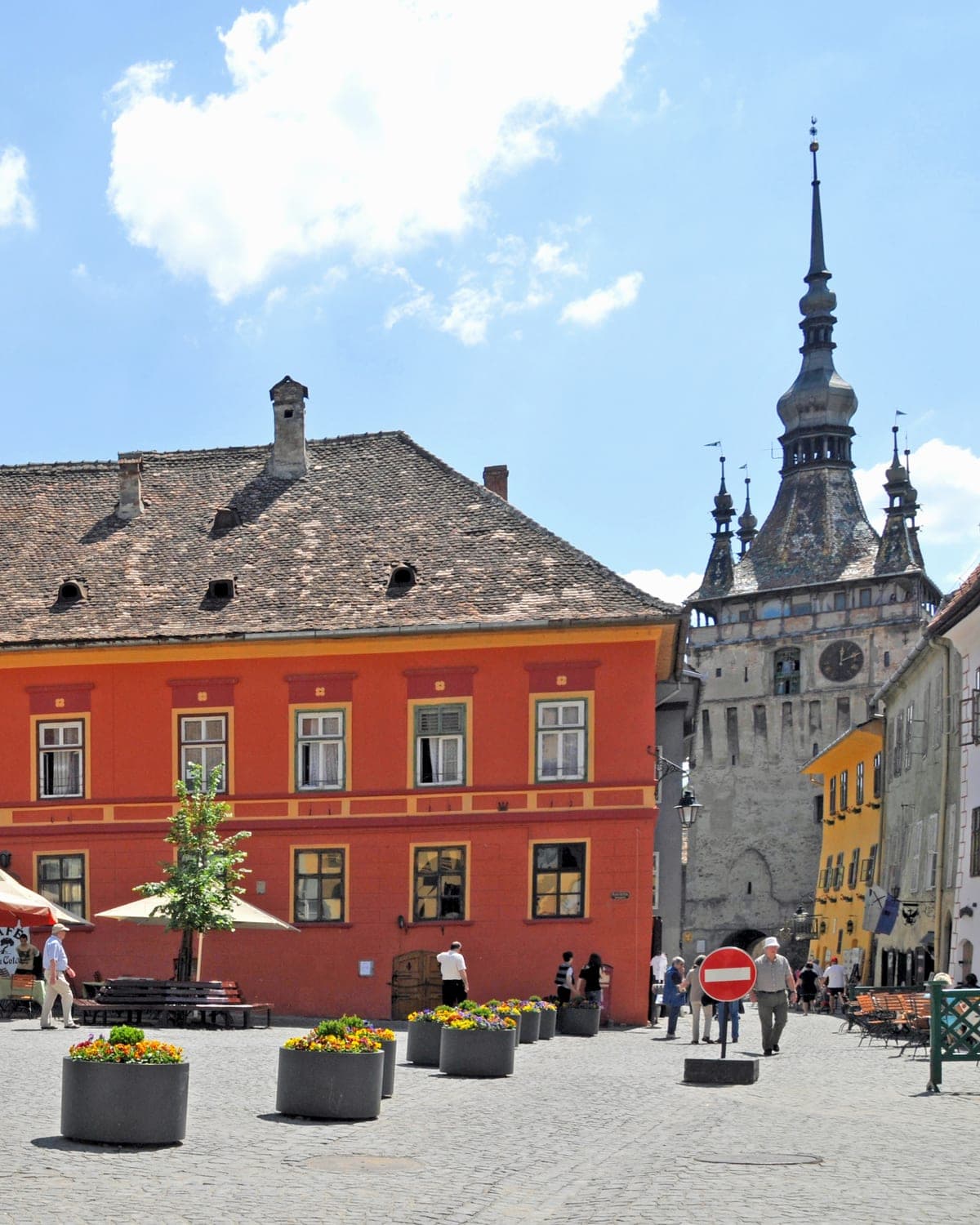
  • Pastel-painted Saxon houses around Piața Cetății with the Clock Tower rising behind
    fig. IV.
    IV.Anno Heart of the upper town

    Citadel Square

    Piața Cetății

    A small square ringed with ochre, mustard, and rose-painted houses, where the Saxon guilds once held their markets. The pastel colours catch every angle of the afternoon sun. Two cafes, one bookstore, no chains.

    Sub solebeneath the sun
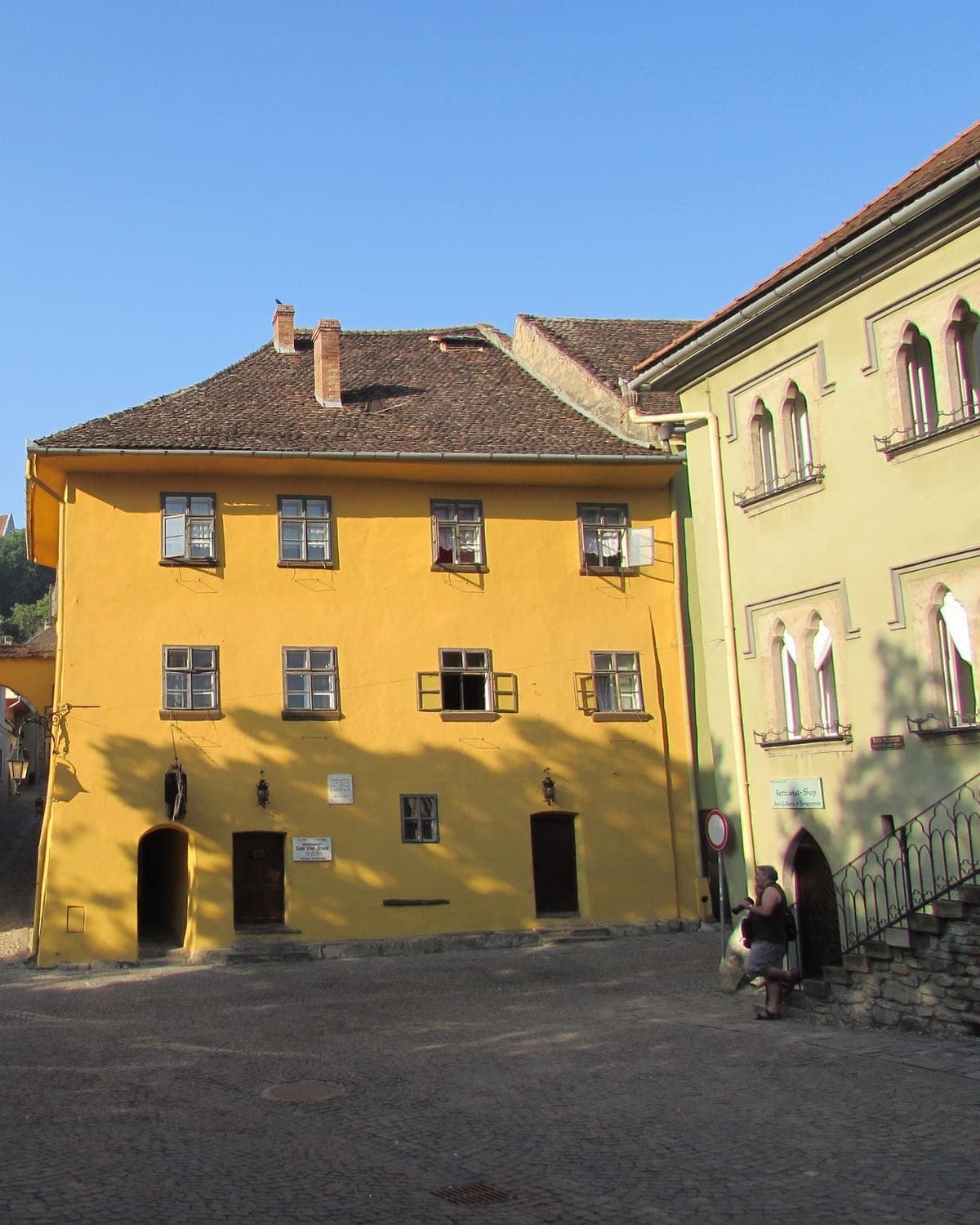
  • Yellow façade of Casa Vlad Dracul on a cobblestone corner of the Sighișoara citadel
    fig. V.
    V.Anno Vlad III's birth, 1431

    Casa Vlad Dracul

    House of Vlad Dracul

    The yellow house on Strada Cositorarilor where Vlad III was born and lived until 1436, when his father seized the Wallachian throne and the family rode south. Vlad II had coins minted in the town during his exile here. Today the ground floor is a restaurant; the upper rooms are a small, sober museum.

    Domus draconishouse of the dragon
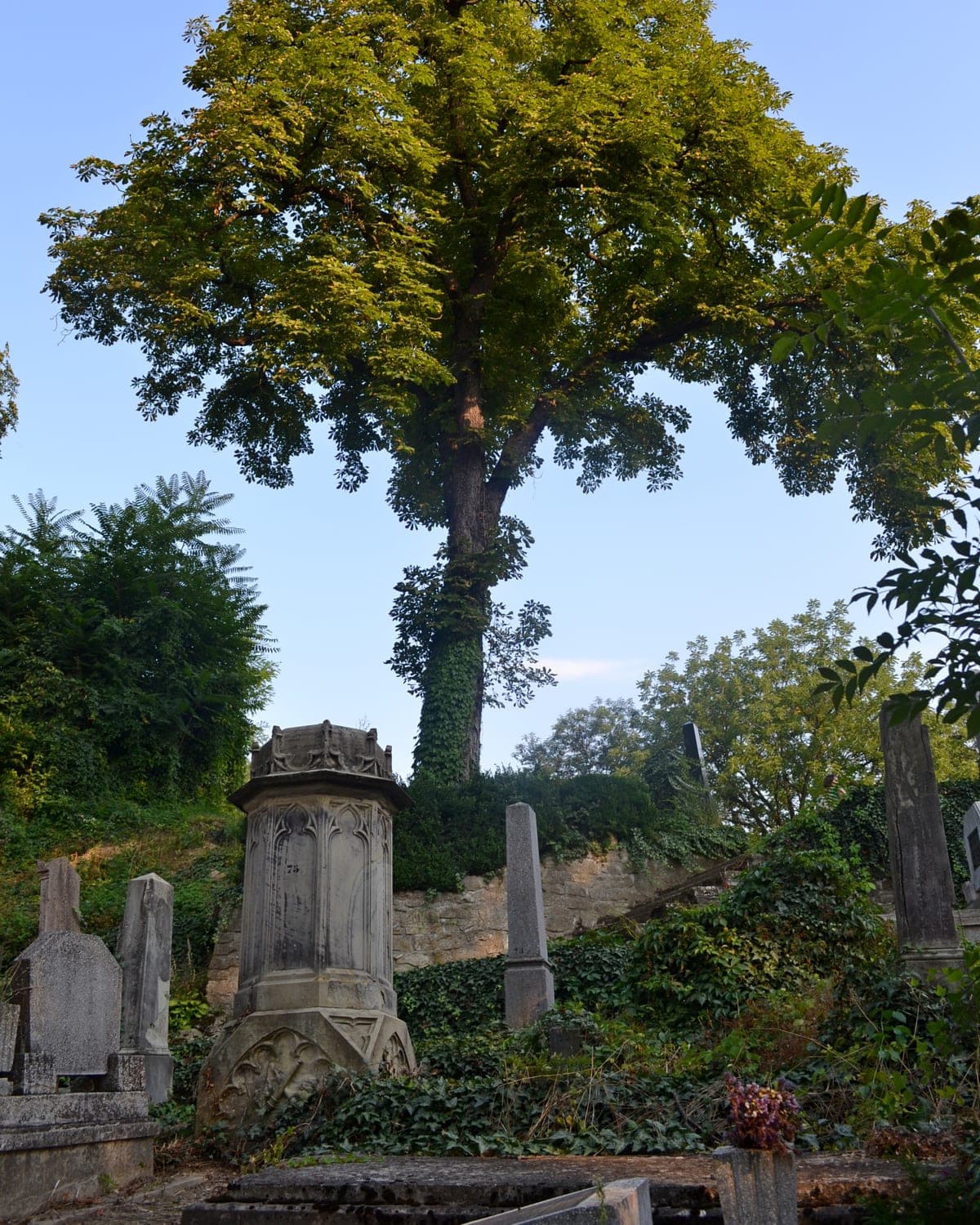
  • Saxon gravestones beneath an old tree in the hill cemetery above Sighișoara
    fig. VI.
    VI.Anno Saxon era

    Scholars' Stairs and the Saxon Cemetery

    Cimitirul Săsesc

    Past the Church on the Hill, terraced into the ridge, the Saxon cemetery holds gravestones in archaic German script reaching back four centuries. Quiet, walk-able, almost no other visitors. The trees here are older than the city.

    Mementoremember

Caput Tertium

Inside the walls

Intra muros

A surveyor's chart of the upper citadel, traced from the surviving walls and the nine guild towers that still stand watch.

Forum CivitatisCITADEL SQUAREForum MuseiMUSEUM SQUAREEcclesia in MonteCHURCH ON THE HILLEcclesia MonasteriiMONASTERY CHURCHDomus DraculaeCASA VLAD DRACULDomus CerviSTAG HOUSESchola in MonteHILLTOP SCHOOLTurris HorologiiCLOCK TOWERTurris SartorumTAILORS' TOWERTurris SutorumBOOTMAKERS' TOWERTurris FerrariorumBLACKSMITHS' TOWERTurris StannariorumTINSMITHS' TOWERTurris CoriariorumTANNERS' TOWERTurris RestorumROPEMAKERS' TOWERTurris CarnificumBUTCHERS' TOWERTurris PellionumFURRIERS' TOWERN100 m

tab. III. Civitas Schaesburgensis

guild towergatechurchcovered stairway

Caput Quartum

Tales from the citadel

Narrationes Civitatis

Four small chronicles, lifted from the margins of older books and the quiet of the hill. Each is true in the way old paper is true; the dates hold, the people are gone.

Horologius

The Clockmaker's Apprentice

In 1648, when the painted figures were first set into the tower, a Saxon boy of twelve was kept on to oil their joints. He climbed the ladders before dawn, before the bells, with a small clay jar of linseed and tallow, and listened to the gears warm in his hands. They said the figures only kept time because the boy still did, every morning, even on the feast days when his mother begged him to rest.
from the citadel chronicles

Porta Pondus

The Weight of the Gate

In the winter of 1431, the year a child was born to Vlad II in the yellow house on Strada Cositorarilor, the citadel's main gate was barred at vespers against three travellers without sealed papers. The watchman wrote in his log that the iron took two men to drop and that the strangers slept against the outer wall until first light. He did not record their names. He never had reason to.

watchman's ledger, fragment

Nuptiae MDCXLII

A Wedding in the Year of the Staircase

The Covered Staircase was finished in 1642, and on the autumn it opened a young couple climbed it together for the first marriage to be blessed at the Church on the Hill that season. The bride carried apples in her sleeves; the groom counted the steps aloud as a joke against his nerves, and was wrong by four. The fresh wood smelled of resin all the way up. They were the first of many.

parish register, 17C

Petra Loquens

The Saxon Inscription

On the hill above the citadel, a gravestone of weathered limestone bears a line of archaic German that nobody could read for three hundred years. In 1924 a philologist from Hermannstadt sat with it for an afternoon, copied the letters into a pocketbook, and translated them at last: she waited beneath this oak, and was not afraid. The oak is still there. The stone is darker now, and the moss has not been cleared.

marginalia, 18C

An invitation

What was your name in 14th-century Sighișoara?

The chronicle still keeps the names of those who walked these stones.

draw a name from the citadel rolls

Caput Quintum

The Dragon's Son

Filius Draconis

The boy who became a name

e was a child here. He learned the cobblestones of Strada Cositorarilor, the bells of the Clock Tower five doors away, the sound of Saxon spoken by the guildsmen who came up from the lower town. By the time he was about five his father took the throne of Wallachia and the family rode south. The boy who left Sighișoara grew into the voivode his scribes would style Drăculea, the Ottomans Kazıklı, and the world, four centuries on, Dracula.

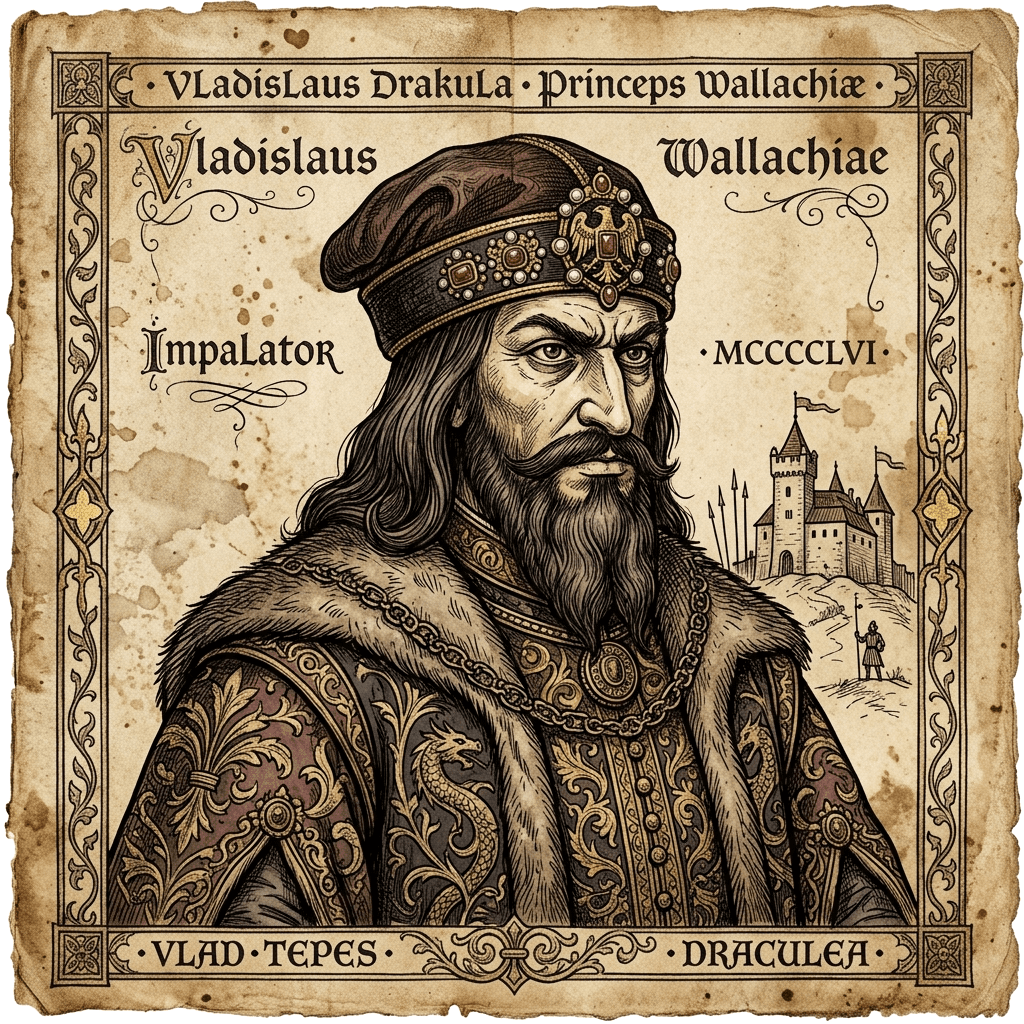
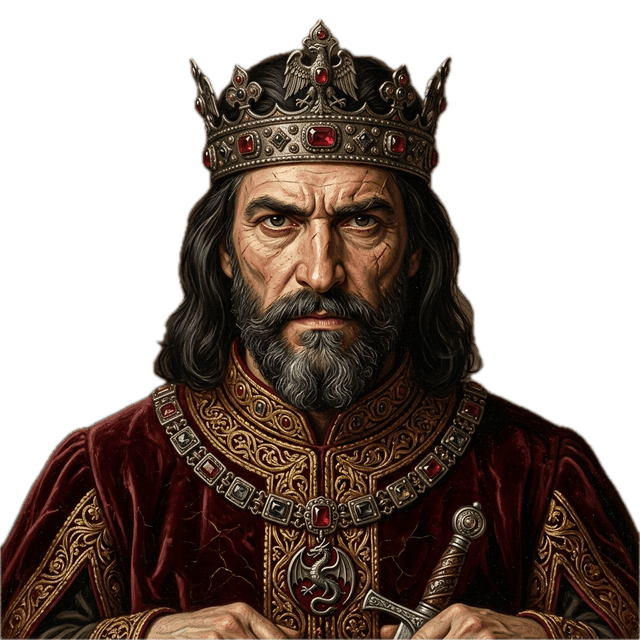
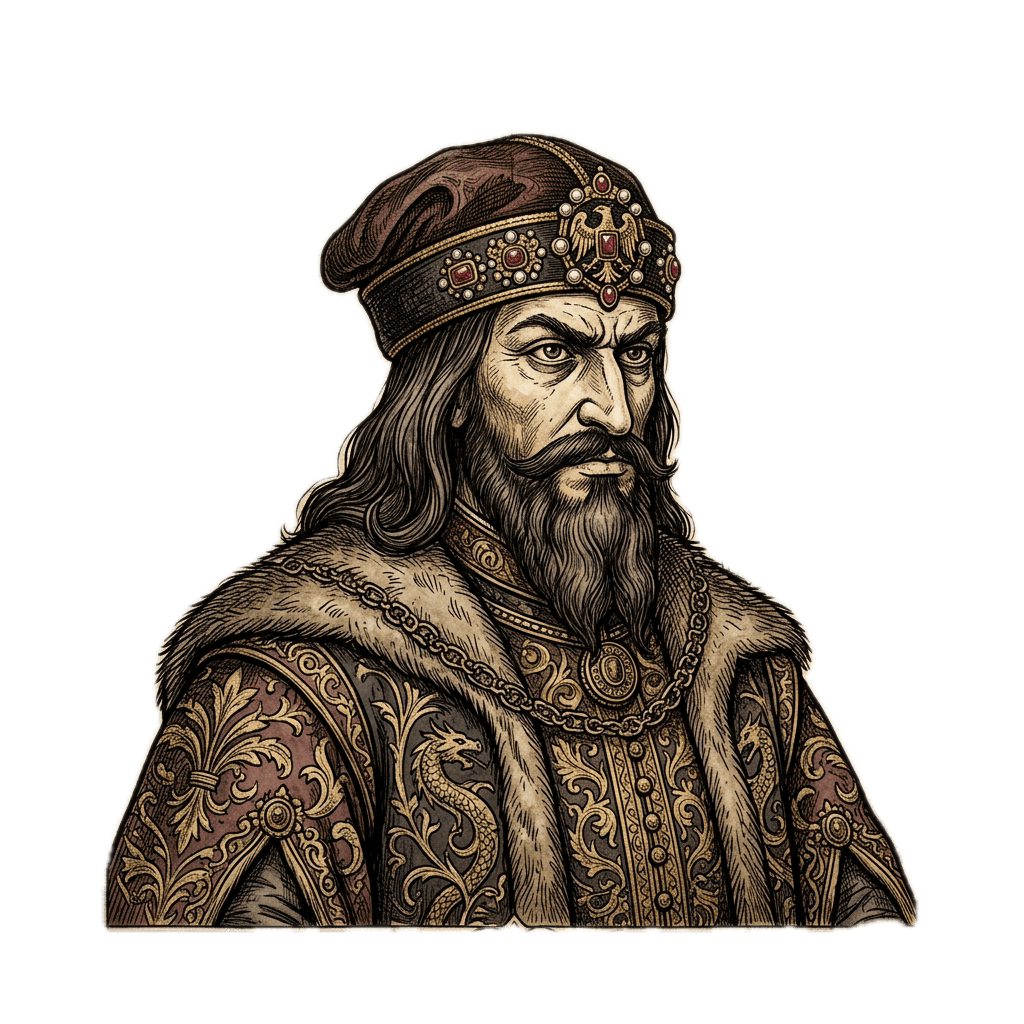
Manuscript portrait card of Vlad III, voivode of Wallachia, styled Vladislaus Drakula, Princeps Wallachiae
  1. I

    Ordo Draconis

    An order founded against the Turks

    Sigismund of Luxembourg founded the Order of the Dragon in 1408, a chivalric league sworn to defend Christendom against Ottoman expansion. Twenty-three years later, in February 1431, he inducted Vlad II, the boy's father, into its first rank at Nuremberg. The dragon coiled on the family seal became the cognomen the Romanian tongue still uses for him: Dracul. From the Latin draco. The slide toward the word for devil came later, and from somewhere else entirely.

    MCDVIII

  2. II

    Drăculea

    What the name meant in 1431

    Drăculea is what a Wallachian scribe wrote when he meant the son of Dracul, son of the dragon. Vlad III's surviving chancery documents are styled this way. The other name, Țepeș, the Impaler, was given to him later: in Ottoman usage as Kazıklı Voyvoda by around 1500, and in Romanian by the mid-sixteenth century. He was never called this in his lifetime.

    Filius Draconis

  3. III

    Domus Draculae

    Five winters in the citadel

    By long tradition the yellow house on the tinsmiths' lane was Vlad II's residence during the Sighișoara years. He lived in exile here under Hungarian protection, minted his own coinage, and waited for the Wallachian throne. Vlad III was born in 1431 and the family stayed until roughly 1436, when the throne came at last and they rode south to Târgoviște. The boy left a child.

    Strada Cositorarilor

Yellow façade of Casa Vlad Dracul on a cobblestone corner of the Sighișoara citadel

The yellow façade has stood, in some form, for six centuries. Plaque on the wall, restaurant on the ground floor, the upper room kept as a small exhibit.

Cezar Suceveanu, CC BY-SA 4.0
He left this town as a child of five and returned to it only in story; the citadel kept his cradle, the world kept his name.
marginalia, citadel chronicles

What the world made of him

I.

The novelist who never came

Bram Stoker borrowed the name and almost nothing else. He found it at Whitby in the summer of 1890, in an 1820 book by William Wilkinson on Wallachia, which translated Dracula as devil in a footnote. His working draft called the count Wampyr; he changed it after reading Wilkinson, kept the new name for seven more years of writing, and published in 1897. Stoker never visited Romania, never saw Sighișoara, and his villain shares almost nothing with the historical voivode beyond a borrowed surname.

II.

The castle is the wrong castle

Bran is famous to tourists as Dracula's Castle. It is a beautiful Saxon customs fortress on the Brașov road and worth the visit on its own terms, but Vlad III had no historical connection to it. His real seats were Târgoviște, the princely court of Wallachia, and Poenari, the mountain stronghold above the Argeș gorge. The castle in Stoker's novel is invented.

III.

The vampire is not him

Romanian folk tradition has its own undead, the strigoi, with centuries of stories about them. None of those stories are about Vlad III. The conflation of the historical voivode with the vampire is a 20th century invention from Hollywood and paperback covers, not from any Transylvanian village.

In Romania he is read differently. From Iorga onward, Vlad III is a frontier prince: a centralizer who broke the power of treacherous boyars and a defender whose night raid on Mehmed II's camp in 1462 checked Ottoman expansion into Wallachia for a generation. Walk Strada Cositorarilor. The yellow house is still there.

Anno MCDXXXI

Rarissima

Eleven in Romania. One like this.

Sighișoara

There are 1,248 UNESCO World Heritage sites in the world. Romania has eleven of them. Of those eleven, Sighișoara is the only one whose claim is a fortified medieval town that people still live inside, not a museum.

  • Romanian UNESCO site
  • Sighișoara
  • Other UNESCO sites

UNESCO World Heritage List, 2025.

Tempus

When to come

De Tempore

The citadel keeps the slow time of harvests, processions, and feast days. One week of the year, the centuries fall away and the gates open onto the 1400s.

Festivalis MediaevalisJanFebMarAprMayJunJulAugSepOctNovDec

The festival falls on the last weekend of July, when the citadel returns to the 1400s.

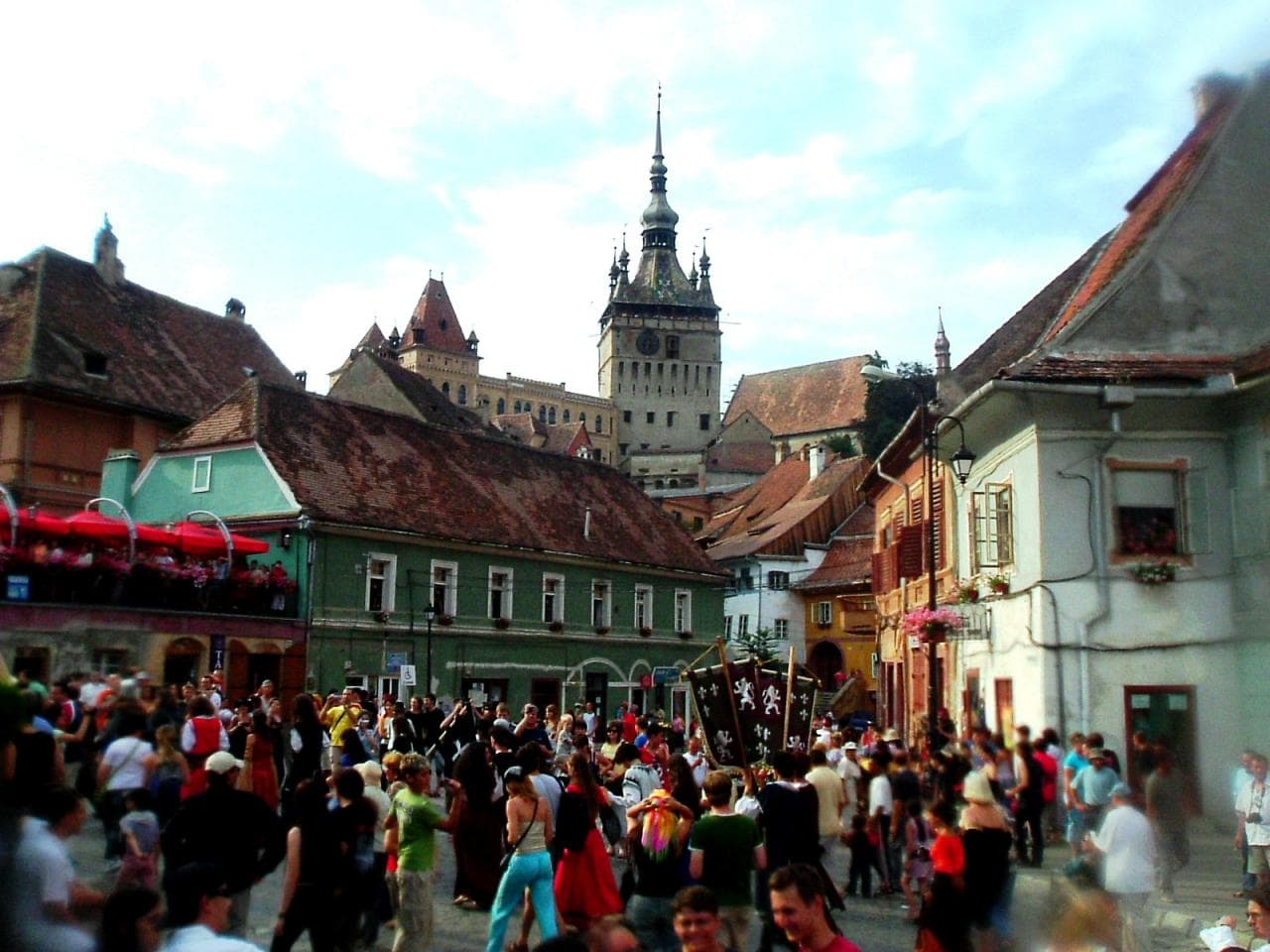
Crowds filling the streets of Sighișoara during the Medieval Festival, with the Clock Tower rising above the rooftops

Each July

The Medieval Festival

For three days every summer, the citadel returns to the 1400s. Knights, troubadours, falconers, fire-eaters, blacksmiths working iron in the squares. Locals open their courtyards. The whole city smells of woodsmoke and roasted plum. If you can plan around any single weekend in Romania, plan around this one.

Last weekend of July

Plan your visit

A practical guide for first-time travellers.

I.

When to come

May through early October is the easy answer. June and September give you mild light and thin crowds. December into early January is colder but the citadel under snow is its own argument.

best light: late afternoon

II.

How to get there

Fly into Târgu Mureș, Sibiu, Cluj-Napoca, or Bucharest, then drive. Târgu Mureș is the closest at roughly an hour, but flights are limited; Sibiu is about ninety minutes through the Transylvanian plateau and has more international connections; Cluj is two and a half hours; Bucharest is four. From Brașov there are several daily trains that take roughly three to three and a half hours, leaving the Olt valley near Augustin and following the Târnava Mare into the citadel.

trains leave from Brașov

III.

Where to stay

Sleep inside the citadel. The Sighișoara hotels are mostly small, family-run guesthouses inside Saxon houses, which is the point. Two nights minimum so you have one slow morning to wander before any other tourists arrive.

two nights at minimum

Before you go

Press the seal to close the letter.